|
|
AMD Sampling for O&M; of Treatment Systems
|
|
Record Sampling Data @

Monitoring Assistance @

|

Check out our Western PA Counterpart!!
|
|
|
Eastern Coal Region Roundtable Website
|
|
|
Visit the Eastern Coal Region Roundtable Website for large collection of grant opportunities.
|
|
Mine Subsidence Insurance
|
|
|  |
|
Press Releases: Hard Coal Films to be Screened at the Anthracite Heritage Museum
|
|
FOR IMMEDIATE RELEASE Contact: Chester J. Kulesa
March 26, 2009 (570)963-4804
Calendar Notice:
When: Sunday, April 26, 2009, 1 p.m. to 5 p.m.
What: Anthracite Coal Films Screening
Where: Anthracite Heritage Museum, McDade Park, Scranton
On Sunday, April 26, 2009, at 1 p.m., the Pennsylvania Anthracite Heritage Museum will screen two documentary films. These include Marc Brodzik’s film Hard Coal as well as Chris Perkel and Georgie Roland’s film The Town That Was. The program will be introduced by Dr. J. Philip Mosley, Professor of English and Comparative Literature at Penn State Worthington Scranton and member of the Anthracite Heritage Museum and Iron Furnaces Associates. Dr. Mosley will also lead a discussion after each film. A mid-afternoon break will offer refreshments. This film program is free and open to the public.
The film Hard Coal: Last of the Bootleg Miners has won the Best Feature Documentary Award at the 2009 DIY Film Festival in Los Angeles, and an official selection of the 2009 Carolina Film Festival and 2009 Buffalo-Niagara Film Festival. The film The Town That Was is the story of the coal seam fire under the town of Centralia, and the efforts of the youngest remaining resident, John Lokitis, to keep his hometown alive.
The Pennsylvania Anthracite Heritage Museum is located in McDade Park, off Keyser Avenue, in Scranton (Exits 182 or 191-B off I-81, and Exit 122, Keyser Avenue, from I-476). OPEN HOURS: Monday through Saturday, from 9:00 a.m. to 5:00 p.m., and Sunday, 12:00 noon to 5:00 p.m. Admission is charged for the Museum’s main exhibit, Anthracite People: Immigration & Ethnicity in Pennsylvania’s Hard Coal Region. Admission to a temporary exhibit, The Great Anthracite Coal Strike of 1902, is included. Call the Museum at 570-963-4804, or see www.anthracitemuseum.org, for more information.
This program is being held in conjunction with the 2009 theme of the Pennsylvania Historical and Museum Commission (PHMC) entitled Energy: Innovation and Impact. This theme focuses on energy and the effect it has had on the Commonwealth. See for yourself how energy fueled Pennsylvania and the developing nation by exploring PHMC historic sites and museums along the Energy Trail of History. For more information on stops along the Energy Trail of History, visit www.paenergytrail.com.
The Pennsylvania Anthracite Heritage Museum is administered by the Pennsylvania Historical and Museum Commission. Individuals with disabilities who need special assistance or accommodations to visit the Museum should call the Museum at 570-963-4804, in advance to discuss their needs. Pennsylvania TDD relay service is available at (800) 654-5984.
|
|
Press Releases: 11th Annual PA Abandoned Mine Reclamation & Coal History Conference set for July
|
|
2-26-09
The Eastern PA Coalition for Abandoned Mine Reclamation will be taking the lead on the coordination of the 11th Annual PA Abandoned Mine Reclamation & Coal History conference for 2009, with its western PA counterpart, WPCAMR, and other state-wide reclamation partners who make up the Conference Planning Committee. The AMR Conference is set for July 13-16th, 2009, hosted by the University of Pittsburgh, at Johnstown’s Living Learning Center at the heart of the campus. This year’s conference theme will be focused around renewing the collective energy of our state-wide patch town heritage and culture to become the new green communities of the future. Alternative renewable energy sources that can potentially be derived from abandoned mine sites and underground mine water pools are two of the focus areas that are being considered at this year’s conference. The Alternative Energy Investment Act and the Alternative Fuels Incentive Act, both signed by Governor Rendell in July 2008, will provide $665.9 million of state investment in alternative energy sources, is expected to attract up to $3.5 billion in private investment in alternative energy in Pennsylvania, and 10,000 jobs.
With the national economy falling into a recession, consumers need to begin to think about leaning towards greater fuel efficiencies and more conservative energy consumption. Corporate responsibilities lie on the ability to find alternative clean energy sources that can diversify their portfolios and the need for consumptive use of our Commonwealth’s rivers and streams for purposes in the industrial gas & oil fields development. There is a growing national support for economic redevelopment that will create green jobs related to infrastructure development. PA’s abandoned mine lands and mining impacted waterways are now poised to become some of our greatest assets in our environment.
Our community watersheds have the opportunity to partner with companies that are interested in our Commonwealth’s resources on our abandoned mine lands. These problem areas could one day create sustainable communities that could decrease our carbon footprint utilizing solar, wind, hydro-electric, geothermal, and the Marcellus Shale oil & gas energy, as opposed to increasing our overall footprint based solely on fossil fuel alone. Attendees will hopefully be able to come away from this year’s conference with information not only on alternative energy sources, but on ways in which they can begin to reduce costs to their overall operation & maintenance of AMD treatment systems, reclaim additional acres of abandoned mine lands through public-private partnerships through the various power industries that will be invited, and to establish relationships with corporations from within and outside of PA. It will be incumbent upon the watershed stewards to stress and inform these corporation of the importance of maintaining our coal heritage while still shaping our communities future in our modern day society.
We are looking for industry leaders to come and exhibit and speak to PA’s community leaders and state-wide organizations that are interested in creating a marriage between these new “green jobs” that will stimulate the local economies of these watersheds, while at the same time protecting and reclaiming the sins of past mining practices on these former industrial brownfields of the mining industry. While our community leaders are stewards of our local watersheds impacted by mining, we need to work with our economic and private sector leaders to become engaged in corporate citizenship on a local level, particularly with new industry leaders who are coming into PA. We are encouraging those industry leaders to become a vendor or a sponsor and have an opportunity to speak at the conference about your corporation interests and future innovative technologies in the field of abandoned mine reclamation.
Planning for topics is ongoing as we speak. There will be a half-day tour on the 13th in and around the Greater Johnstown Area to AMD Sites, reclamation projects, municipal wastewater treatment technologies using hydroelectric generation, and other significant places of interest to remind us of our coal heritage and culture. The Johnstown Area Heritage Association is going to play a key role in this year’s conference. There will be a day and a half of abandoned mine reclamation and AMD topics as well as a day and a half of coal heritage and history topics. We are also looking for speakers related to PA coal history to provide the historical context to base future decisions upon. The last day, on the 16th will be a half day, with an optional tour planned for the PA Coal Heritage Museum in Johnstown.
The AMR conference will also focus on receiving an update from the PA Department of Environmental Protection on the status of the Title IV Surface Mining Control & Reclamation implementation plans, Set-Aside funding for AMD remediation projects, and the AMD Treatability Criteria Selection for AMD remediation projects. Can black culm banks and orange streams in our mining impacted watersheds becoming the “new green communities” of the future? Join us and find out for yourself, if you would like to become a part of the solution to our mine water pollution. Check out the conference website at 2009.treatminewater.com
CONTACT:
Robert Hughes
EPCAMR Executive Director
570-0674-3411
[email protected]
|
|
Press Releases: Application Announced for the 2009 NCAC Community Awards
|
|
FOR IMMEDIATE RELEASE: January 20, 2009
Contact Information:
Kurt Bauman, (570) 655-5581, ext. 237
Kate Feissner, (570) 655-5581, ext. 264
Pittston, PA - January 20, 2009 - The Northeastern Pennsylvania Nonprofit & Community Assistance Center (NCAC) has announced an application round for the 2009 NCAC Community Awards.
This awards event was established to highlight those nonprofit organizations that make an extraordinary impact on the quality of life within our seven county region, which includes Carbon, Lackawanna, Luzerne, Monroe, Pike, Schuylkill and Wayne. A first and second place award will be presented for each of the six categories including: Arts & Culture, Children & Youth, Community Development, Education, Environmental Action/Animal Welfare and Health & Human Services.
The 2009 NCAC Community Awards mark the third year for the Ted Daniels Community Development Award. This award category is memorialized in honor of Ted Daniels, former President of the NCAC Board of Directors and V.P. of Business Development for Pennstar Bank, who passed away on November 7, 2006.
According to Charles Barber, NCAC Board Chairman, “The foundation of any community is built upon the many nonprofit and community groups who continually offer new and innovative services that meet the ever changing needs of society. The Community Awards event enables us to recognize the accomplishments of many nonprofit and community minded groups that are all working together toward a common goal. They strive to improve the day-to-day life of all citizens in the region.”
Entries may be submitted by nonprofit organizations, political subdivisions, chambers of commerce, industrial development groups, school districts, colleges or universities, social clubs, business or industry, media organizations and other organizations involved in community improvement.
Award recipients do not need to be a 501(c)3 nonprofit organization. First place award winners will receive a donation of $250 to $500 for their organization and second place award winners will receive a free NCAC membership. All entrants must submit a completed application form, which can be found at www.nepa-alliance.org/ncac.htm, to NCAC, 1151 Oak Street, Pittston by 4:00 p.m. on Friday, February 20, 2009.
For more information about the 2009 NCAC Community Awards, please contact Kurt Bauman or Kate Feissner at 570-655-5581, by email at [email protected] or visit the NCAC website at www.nepa-alliance.org/ncac.htm.
|
Governor Rendell Says Pennsylvania Building on its Environmental Commitment through Latest Growing Greener Grants
HARRISBURG (March 7) -- Governor Edward G. Rendell today continued Pennsylvania’s commitment to the environment by announcing a $22 million investment in more than 120 projects that will help restore the state’s polluted streams, provide clean water, and help prevent devastating floods in communities across the commonwealth
The Governor said Pennsylvania’s long mining history and extensive farm industry have created challenges that affect the state’s natural water resources. Additionally, regular floods throughout the state have diminished the effectiveness of natural and man-made measures designed to protect people, businesses and communities.
With the $22.3 million in grants announced today, however, Pennsylvania will expand its efforts to address these challenges.
“Pennsylvania has been blessed with incredible natural resources,” said Governor Rendell. “Unfortunately our streams have been tainted by agricultural run-off and acid mine drainage from the unregulated activity of the past. Furthermore, recurring floods in many places have eroded stream banks and rendered many flood measures ineffective, which can exacerbate the damage caused to our communities.
“The $22.3 million in grants we’re announcing today will help undo this damage with effective treatment systems, agricultural best management practices, stabilization work, stormwater management strategies, and flood protection projects. Together, these measures will help restore the health and natural functions of our streams.”
Of the $22.3 million awarded today by the Department of Environmental Protection, $9 million comes from the Growing Greener program in the form of watershed grants and $10.1 million comes from the Growing Greener II initiative. The remaining $3.2 million was awarded by DEP in nonpoint source implementation program grants, which are funded by the federal government through Section 319(h) of the Clean Water Act.
The grants support acid mine drainage treatment facilities, stream bank stabilization efforts to reduce erosion and protect against flooding, added riparian buffers to filter pollutants before reaching streams, aquatic habitat improvements, and comprehensive watershed protection planning. The grants will also be used to implement innovative agricultural and stormwater management techniques that reduce nonpoint source pollution in streams.
This year, DEP is allocating up to $2 million to begin addressing the unmet operation and maintenance costs of acid mine drainage remediation projects.
The grant funds also will support the first Watershed Renaissance Initiative, awarding $381,000 to treat acid mind discharges in Indiana County’s Bear Run watershed. The new initiative is intended to fund the complete or substantial implementation of an existing watershed restoration plan by encouraging public-private partnerships, long-term coordinated stewardship of the water resources, and educational outreach to promote environmental protection.
Smaller, impaired watersheds that have existing comprehensive plans to restore water quality are targeted through the Watershed Renaissance Initiative, which will again be available in next year’s grant round.
Since 1999, DEP has invested more than $190 million in watershed grants for 1,657 projects in all 67 counties of Pennsylvania through the traditional Growing Greener program. The grants are used to create or restore wetlands, restore stream buffer zones, eliminate causes of nonpoint source pollution, plug oil and gas wells, reclaim abandoned mine lands and restore aquatic life to streams that were lifeless due to acid mine drainage.
Voters overwhelmingly approved the $625 million Growing Greener II initiative in May 2005 to clean up rivers and streams; protect natural areas, open spaces and working farms; and shore up key programs to improve quality of life and revitalize communities across the commonwealth. Since then, DEP has awarded $38.5 million for watershed projects to make Pennsylvania healthier, a better place to live, and more competitive in attracting and supporting business investment.
DEP is now accepting grant applications for the next Growing Greener grant round. Applications will be accepted until May 16.
For more information or to download a grant application form, visit www.depweb.state.pa.us, keyword: Growing Greener.
EDITOR’S NOTE: The following is a list by county of the 124 watershed restoration and protection grants:
ADAMS COUNTY
Watershed Alliance of Adams County - $15,300 for operation and maintenance of the East Berlin Stream Gauge on the Conewago Creek.
ALLEGHENY COUNTY
Bridgeville - $50,000 for streambank stabilization on McLaughlin Run.
Township of Upper St. Clair - $140,000 for water quality and habitat improvement on Chartiers Creek.
Trout Unlimited, Penn’s Woods West Chapter - $133,055 for stream restoration on Little Pine Creek.
Jefferson Hills - $60,000 to stabilize a portion of Peters Creek that experiences severe erosion.
ARMSTRONG COUNTY
Parks Township - $24,950 for streambank stabilization and erosion control on Carnahan Run.
Armstrong Conservation District - $78,375 to remediate erosion issues along a 5.5 mile length of Plum Creek through utilization of natural stream design techniques and restoration of riparian buffers.
Armstrong Conservation District - $8,229 to restore and protect a portion of Buffalo Creek.
Armstrong Conservation District - $24,850 to assess 46 square miles of watersheds in Armstrong County that flow directly into the Allegheny River. The assessment would identify and prioritize problems including acid mine discharge, flooding, combined sewer overflows, sedimentation/erosion, and agricultural problems.
Armstrong Conservation District - $35,000 to reclaim five acres of abandoned mine land and convert the land into productive pastureland utilizing an intensive rotational grazing system.
BEAVER COUNTY
Independence Conservancy - $330,000 to continue stream restoration/stabilization at four sites on Raredon Run.
BEDFORD COUNTY
Broad Top Township - $375,000 for the design and construction of a passive treatment system in the headwaters of Sandy Run.
Broad Top Township - $15,600 for the design and construction of a passive treatment system in the headwaters of Sandy Run.
Juniata Clean Water Partnership - $100,000 for retrofitting the Tussey Mountain High School parking lot with a porous surface, leading to an interceptor water garden to protect an impaired stream.
BERKS COUNTY
Berks County Conservation Association - $171,660 to install innovative stormwater management techniques on the county agricultural campus to improve water quality and for educational purposes.
BLAIR COUNTY
City of Altoona - $100,000 for the final phase of stream improvements on Mill Run.
BRADFORD COUNTY
Schrader Creek Watershed Association - $129,985 to build a passive acid mine discharge treatment system on Coal Run, a tributary to Schrader Creek.
Canton Township - $135,000 for streambank stabilization, dirt and gravel road improvement and agricultural best management practices on eight farms in the North Branch Towanda Creek watershed.
Sylvania - $7,500 for a natural stream channel design for Wallace Run, a tributary to Sugar Creek.
BUCKS COUNTY
American Littoral Society - $145,000 for stream stabilization and restoration for a portion of Swamp Creek.
Warrington Township - $100,000 to install stormwater best management practices, including rain gardens, rain barrels, retrofitting basins, and to provide public education and outreach in the Little Neshaminy Creek watershed.
Bucks County Conservation District - $6,408 for organizing a new watershed advocacy organization, the Aquetong Watershed Association, in Solebury Township and New Hope.
Heritage Conservancy - $52,170 for education, outreach and streambank stabilization along an unnamed tributary to the Little Neshaminy Creek on the Lindsay Farm Preserve.
BUTLER COUNTY
Wild Waterways Conservancy - $42,800 for removal of concrete dam and submerged wooden dam at Harmony Junction in Jackson Township.
CAMBRIA COUNTY
Clearfield Creek Watershed Association - $40,828 for design of a passive treatment system to treat 3 acid mine drainage discharges in the headwaters of Little Laurel Run.
Cambria County Conservation District – $172,180 for acid mine discharge treatment on Trout Run, including an innovative limestone bed treatment system.
Cambria County Conservation District – $105,000 for four limestone bed treatment systems to treat abandoned mine discharge flowing to an active brook trout fishery on the South Fork Little Conemaugh River.
Dunlo Rod and Gun Club - $27,678 to raise alkalinity in the main stem of the South Fork Little Conemaugh River to restore brook trout to lower stream reaches.
CENTRE COUNTY
ClearWater Conservancy of Central Pennsylvania - $34,150 to remove the remains of Dayton Dam, restore stream channel and install fish habitat structures to enhance the existing wild trout fishery.
Milesburg - $5,000 to establish the Bald Eagle Watershed Association.
Centre Region Council of Governments - $10,000 for education and outreach on stream buffer protection.
CHESTER COUNTY
Tredyffrin Township - $64,415 for the construction of rock infiltration trenches at two storm sewer outfalls.
Brandywine Valley Association - $54,500 for stream and floodplain restoration on an unnamed tributary to Doe Run.
CLEARFIELD COUNTY
Emigh Run/Lakeside Watershed Association Inc. - $170,646 for acid mine drainage treatment on Emigh Run.
Pike Township - $400,082 for design and reclamation of acid mine discharges on Anderson Creek.
Lawrence Township Supervisors - $47,063 for the design, permitting and engineering design costs of a passive treatment system for unnamed tributary of Montgomery Creek.
Emigh Run/Lakeside Watershed Association - $17,292 for an acid mine treatment system study for the upper most reaches of Hubler Run.
Clearfield Creek Watershed Association - $49,000 to assess acid mine drainage to Muddy Run and its tributaries and develop a restoration and sampling plan.
CLINTON COUNTY
Trout Unlimited - $595,000 for a passive treatment system for discharges to Two Mile Run, a tributary to lower Kettle Creek.
Trout Unlimited - $99,363 for mine pool stabilization at the Kettle Creek Coal Co. mine No. 1.
Keystone Central School District - $40,000 to convert a former agricultural field adjacent to the school into a wetland and convert five acres of adjoining upland native grasses for use as a wetlands educational tool.
CRAWFORD COUNTY
Crawford County Conservation District - $210,000 for installation of agricultural best management practices on eight farms.
Allegheny College - $25,000 for an environmental assessment of the Mill Run watershed.
CUMBERLAND COUNTY
Trout Unlimited, Cumberland County Chapter - $6,863 to remove floodplain and channel obstructions associated with the Piper Mill and Thomas Hatchery operations on Big Spring Creek.
DAUPHIN COUNTY
Dauphin County Conservation District - $256,790 for construction of a passive treatment system for discharges polluting Bear Creek and Wiconisco Creek.
DELAWARE COUNTY
Villanova University - $185,000 for stormwater wetland best management practice reconfiguration.
Swarthmore - $21,759 to address stormwater management at a playground and pocket park in an urban area.
ELK COUNTY
Elk County Freshwater Association - $250,000 for two treatment systems on Big Mill Creek to abate the persistent acidic conditions.
ERIE COUNTY
Mercyhurst College - $106,500 for a two-year E. coli bacteria monitoring study of the Walnut Creek and Elk Creek watersheds that will identify sources of the bacteria and lead to an action plan that will assist in resolving the bacteria pollution issues in the Lake Erie tributaries.
Erie County Conservation District - $300,000 for 40 agricultural best management practices projects to reduce nonpoint source pollution from farms.
City of Erie - $65,180 for installation of a litter/debris trap on the lower Mill Creek channel at the city’s wastewater treatment facility.
FAYETTE COUNTY
Jacob’s Creek Watershed - $54,195 to apply best management practices to eliminate shore erosion, and improve water quality and fish habitat in Greenlick Lake.
Fayette County Conservation District – $131,828 to design and implement agricultural nutrient and sediment reduction best management practices in headwater streams.
FRANKLIN COUNTY
Falling Spring Greenway - $200,000 to restore degraded reaches of the Falling Spring Branch for the benefit of aquatic species and upland wildlife.
FULTON COUNTY
Fulton County Conservation District - $283,750 for restoration of Spring Run.
Fulton County Conservation District - $160,500 for a publicly accessible greenway with a stable stream channel and a walking trail along Big Cove Creek.
Fulton County Conservation District - $113,770 for providing incentives for 2,000 acres of cover crops on corn silage fields, a no-till farming strategy.
INDIANA COUNTY
Indiana County Conservation District - $160,000 for agricultural best management practices on 10 farms in various watersheds throughout Indiana County.
Indiana County Conservation District - $380,709 for a Watershed Renaissance Initiative to abate acid mine discharges to Bear Run, a tributary of the West Branch Susquehanna.
Stream Restoration Inc. - $14,000 to develop a conceptual plan to treat acid mine discharges at the McIntyre refuse pile, including use of an innovative pre-treatment technology.
LACKAWANNA COUNTY
Taylor - $704,127 for channel restoration and culvert construction on the Colliery Property.
LANCASTER COUNTY
Trout Unlimited, Donegal Chapter - $129,487 for streambank stabilization, fencing and riparian buffer planting along Conowingo Creek.
Columbia - $325,000 to implement a variety of stormwater best management practices, including porous asphalt and concrete surfaces, vegetated swales, and rain gardens, at the new Riverfront Park.
Franklin & Marshall College - $516,650 for sediment and nutrient monitoring relating to legacy sediments.
Enterprising Environmental Solutions - $387,500 to restore a portion of Big Stream Run and remove legacy sediments, reconnect stream to floodplain, restore and create wetlands and riparian buffer. The project will also generate nutrient trading credits and develop some economic value projections for legacy sediments mixed with manure compost.
LEBANON COUNTY
Lebanon Valley Conservancy - $250,000 to implement best management practices on the Quittapahilla Creek.
LUZERNE COUNTY
Luzerne County Conservation District - $102,362 to repair damage to Toby Creek caused by flooding.
Luzerne County Conservation District - $86,689 for a watershed assessment for use in flood-mitigation planning.
LYCOMING COUNTY
Rose Valley/Mill Creek Watershed Association - $3,030 for steambank stabilization on Mill Creek.
MONTGOMERY COUNTY
Whitpain Township - $60,000 to convert two stormwater detention basins to naturalized basins and to increase infiltration and reduce nonpoint source pollution.
Upper Dublin Township - $42,283 to restore a portion of Little Pine Run and to
restore 25,000 square feet of riparian buffer area.
Wissahickon Valley Watershed Association - $40,611 to expand a created wetland area along Bethlehem Pike in Fort Washington to mitigate flood waters, reduce nonpoint source pollution, and provide additional habitat for birds and wildlife.
Pennypack Ecological Restoration Trust - $50,085 for a large infiltration trench to capture and infiltrate stormwater runoff from approximately 18 acres of suburban residential area and roadway.
MONTOUR COUNTY
Montour County Conservation District - $63,354 for installation of manure storage on the Seven Springs Farm.
NORTHAMPTON COUNTY
Northampton County Conservation District - $115,261 to install agriculture best management practices at four agricultural sites determined to be nonpoint sources of nutrients and sediment pollution to the Bushkill-Jacoby watersheds.
Wildlands Conservancy - $325,670 to complete the construction of a natural stream channel, floodplain and bank restoration design for more than 1,000 feet of Saucon Creek and an unnamed tributary.
Bushkill Stream Conservancy - $107,000 for a constructed wetland within the Bushkill Creek Watershed to ease flooding issues in the College Hill section of Easton and improve water quality.
City of Bethlehem - $64,071 to remove the Saucon Creek dam and enhance/stabilize approximately 2,100 feet of stream channel.
NORTHUMBERLAND COUNTY
Northumberland County Conservation District - $79,000 to conduct a feasibility study to treat Quaker Run which is heavily impacted by acid mine discharge from three sources.
SCHUYLKILL COUNTY
Schuylkill Conservation District - $433,189 to evaluate surface and ground water interactions and possible consequences of acid mine discharge remediation, stream restoration and mine pool utilization.
SOMERSET COUNTY
Somerset County Conservation District - $86,000 for repairs to two acid mine treatment facilities on Stonycreek River.
Shade Creek Watershed Association - $20,000 to raise the alkalinity of various tributaries of Shade Creek to improve water quality.
SULLIVAN COUNTY
Columbia County Conservation District - $40,000 for acid mine discharge treatment on Heberly Run, a tributary of Fishing Creek.
TIOGA COUNTY
Babb Creek Watershed Association - $290,000 for two limestone bed passive treatment systems for acid mine discharge on Rock Run, a tributary of Babb Creek.
Babb Creek Watershed Association - $21,835 to rehabilitate an acid mine discharge treatment system and convert it to a settling pond and an open limestone ramp.
County of Tioga - $30,000 to assess and design streambank stabilization/relocation needs of two miles of Marsh Creek. Benefits include mitigation of flood flows to the Village of Stokesdale, stabilization of an eroding railroad grade, stabilization of specific project sites for a “Rails to Trails” corridor extension and reduction of sediment loading.
UNION COUNTY
Union County Conservation District - $235,528 for agricultural restoration on impaired subwatersheds.
WARREN COUNTY
Warren County Conservation District - $25,000 to stabilize streambanks and riparian areas.
WASHINGTON COUNTY
Washington County Conservation District - $100,000 to convert a vertical flow pond acid mine discharge treatment system into a limestone bed treatment system.
WAYNE COUNTY
Lake Wallenpaupack Watershed Management District - $7,300 to stabilize the shoreline along Lake Wallenpaupack adjacent to the boating access at Mangan Cove to reduce soil erosion and provide riparian plantings.
Wayne Conservation District - $4,614 to start the Equinunk Watershed Alliance to protect and preserve the Equinunk watershed.
WESTMORELAND COUNTY
Mt. Pleasant Borough Municipal Building - $72,327 to retrofit a stormwater system.
Loyalhanna Watershed Association - $500,000 to construct a passive acid mine discharge treatment system to improve the water quality in the Loyalhanna Creek.
Turtle Creek Watershed Association - $142,338 for stream restoration and riparian buffering in the Haymaker Run tributary of Turtle Creek.
Sewickley Creek Watershed Association - $95,000 to assess degradation from nonpoint sources in the watershed and develop a restoration plan.
WYOMING COUNTY
Mehoopany Creek Watershed Association - $550,000 to restore the historical stream channel and provide additional natural stream channel stabilization.
YORK COUNTY
Izaak Walton League of America Inc., York Chapter 67 - $30,000 for stream restoration on Pierceville Run – Mitchell Pasture subwatershed of the South Branch Codorus Creek.
Izaak Walton League of America Inc., York Chapter 67 - $100,000 for stream restoration on Pierceville Run – Rockville Road subwatershed of the South Branch Codorus Creek.
MULTIPLE COUNTIES
Pennsylvania Association of Conservation Districts - $143,700 to administer the Non-Point Source Educational Mini Grant program, provide workshops and training including the annual Watershed Specialists meeting.
Pennsylvania Association of Conservation Districts - $5,693,740 for the Conservation Reserve Enhancement Program, supporting farm-based conservation practices such as forest riparian buffers, wetlands, and grass swales in 59 counties.
Luzerne County Conservation District - $123,500 for abandoned mine reclamation
program coordination through the Eastern Pa. Coalition for Abandoned Mine Reclamation.
Western Pennsylvania Coalition for Abandoned Mine Reclamation - $121,500 for conservation district demonstration projects remediating acid mine discharges.
Wyoming County Conservation District - $131,680 for streambank stabilization demonstration project along the South Branch of Tunkhannock Creek.
Western Pennsylvania Conservancy - $111,566 for agricultural best management practices in the impaired Yellow Creek watershed.
Somerset County Conservation District - $150,000 to install stream bank fencing, livestock watering systems, access lanes, and other pasture improvement
management practices on 20 farms in a 14-county area.
American Rivers Inc. - $500,000 for dam removal and river restoration projects statewide.
Northcentral Pennsylvania Conservancy - $250,000 for approximately 80 stream restoration projects in 14 counties, comprising 20 stream miles.
Headwaters Chartable Trust - $40,000 for rotational grazing systems to reduce sediment and nutrient loading to surface and groundwaters.
Natural Lands Trust - $51,000 for a land conservation planning tool to prioritize sites in northeastern Pennsylvania communities.
Penn Soil Resource Conservation & Development Council - $51,000 to promote use of rotational grazing systems that reduce sediment and nutrient loading to groundwater and surface water.
Capital Resource Conservation & Development Area Council - $140,000 for technical assistance relating to no-till farm management systems.
Pennsylvania Horticultural Society - $250,000 to continue the TreeVitalize Watersheds program that restores tree cover in Southeastern Pennsylvania, including riparian buffers and plantings in stormwater detention basins.
Friends Central School - $50,000 to restore riparian areas in urban parkland along Indian Creek.
Peters Creek Watershed Association - $59,055 to assess and develop a watershed plan for Peters Creek in Allegheny and Washington counties.
Penn State University - $7,344 to develop database software to extract best management practices data.
Trout Unlimited - $120,500 to provide rapid-response and prioritized technical assistance to applicants in several areas of mine reclamation activities.
Western Pennsylvania Coalition for Abandoned Mine Reclamation - $100,000 to recover, process, and sell iron oxide from the treatment of mine drainage pollution.
Western Pennsylvania Coalition for Abandoned Mine Reclamation - $100,000 for quick-response repairs on water quality projects that provide critical protections.
Pennsylvania Association of Conservation Districts - $300,000 for engineering technical assistance for projects that treat acid mine drainage, restore streams and implement agricultural best management practices.
Pennsylvania Envirothon - $70,000 to support the efforts of the Pennsylvania Envirothon program.
Stroud Water Research Center - $214,725 to expand an on-going study of three streams to demonstrate the impact acid mine discharge has on ecosystem function, particularly nutrient processing.
Trout Unlimited, Doc Fritchey Chapter - $25,000 for an acid mine discharge treatment project on mine discharges that flow to Rausch Creek and Stoney Creek. The treatment systems would replace the diversion wells that have been maintained on Stoney Creek since 1986.
Trout Unlimited - $81,000 to provide updated water quality and benthic data for the entire West Branch Susquehanna River to document the existing condition of the river and its tributaries, and to quantify water quality improvements and establish a benchmark to measure future improvements.
Moshannon Creek Watershed Coalition - $62,000 to assess acid mine drainage impacting a section of Moshannon Creek from Bear Run to Trout Run and to complete a restoration plan.
|
|
Press Releases: DEP: Mine drainage treatment news reports inaccurate, says DEP secretary
|
|
Funding Will Be Provided This Year and Beyond
HARRISBURG -- Environmental Protection Secretary Kathleen A. McGinty today refuted recent media reports stating that the commonwealth has decided not to fund abandoned mine drainage projects. The secretary said these projects will continue to be funded through the department's abandoned mine reclamation program this year and beyond.
McGinty said that since 2003, Pennsylvania has invested $17.5 million in abandoned mine lands funding on acid mine drainage treatment for streams. The commonwealth has also targeted more than $62 million from the Growing Greener II program for abandoned mine reclamation projects.
This state and federal money has supported 46 acid mine drainage treatment projects.
"Reports that the department will not provide funding for acid mine drainage treatment projects are false," said McGinty. "The Governor remains firmly committed to using all available resources to restore our land and water that was damaged by mining before environmental laws were put in place to prevent this kind pollution,"
Governor Edward G. Rendell was instrumental in lobbying for the reauthorization of the federal Abandoned Mine Lands Fund in Congress, which will provide increased funding for this important environmental initiative over the next 15 years.
Pennsylvania will receive $27.6 million from the federal Abandoned Mine Lands Fund for 2008, which will be used to reclaim abandoned mine lands by: eliminating dangerous highwalls where young people often are injured and even killed while riding motorcycles and all terrain vehicles; closing open mine shafts; and planting grass and trees on land left barren by surface mining.
Under the new law, up to 30 percent of this money can be used for treating abandoned mine drainage that makes streams uninhabitable for fish and other aquatic life.
"What we are doing now, and have been doing for the past several months, is engaging the public to help us determine how we can best use our available resources and, in the years ahead, to reclaim abandoned mine lands and clean up acid mine tainted streams.
"We have held public hearings around the state and are continuing to meet with focus groups to help us make the best decisions on how to carry out this important environmental protection program in the long term," said McGinty. "All Pennsylvanians should be assured we will fund abandoned mine reclamation and stream restoration projects as part of this effort."
Contact: Neil Weaver, (717) 787-1323
|
Campers and Sponsors Needed
Endless Mountains Resource Conservation and Development Council and its partners are once again holding the Woodland Resource Adventure (WRA) Camp for 2008. This twenty-one year old program (previously named Youth Forestry Camp) will be held on the campus of Camp Lackawanna, Tunkhannock, Pennsylvania. The Woodland Resources Adventure Camp begins on Sunday, July 13 at 12:00 am and runs through Thursday, July 17 at 3:30 pm. WRA is an overnight camp and is open for students ages 12-16. This year’s theme is “Forestry”. Lodging and two days of sessions will be held at Camp Lackawanna while two days will consist of field trips to sites in the local area. We will travel to various locations such as a baseball bat factory, tree nursery, Christmas tree farm, and maple syrup operation. Participants will learn about the following topics: tree identification and measurement, Forest Stewardship planning, wildlife impacts to forests, invasive pests, and tree climbing.
The student is responsible to pay $175. The remaining $100 is provided in the form of a sponsorship. We encourage students to make every effort, on their own, to obtain local sponsorship from an organization or business. The Woodland Resource Adventure Camp committee has a limited number of sponsorships available, if you cannot find one on your own. The total fee covers the cost of meals, lodging, insurance, tour transportation, and program materials.
WRA Camp is recommended for young people who want to learn about the outdoors and the environment through an excellent hands-on experience. The Camp provides an opportunity to prepare for the Envirothon competitions, 4H Events and can be used as credit toward Scout Merit Badges.
For any student interesting in attending the camp, please contact Endless Mountains RC&D; Council to obtain a brochure.
Any individual, group or business interested in becoming a sponsor of a student or the camp in general, please contact Endless Mountains RC&D; office by phone 570-265-3409 ext. 5. Donations of any denomination will be accepted. Endless Mountains RC&D; Council is a 501(c)3 non-profit organization, so any donation/sponsorship for the camp or a student is tax deductible.
For more information on the Woodland Resources Adventure Camp, contact Endless Mountains RC&D; Council office by phone 570-265-3409 ext. 5 or www.endlessmountainsrcd.org.
WRA Tentative Agenda: Not all speakers or locations have been confirmed
Sunday, July 13, 2008
Tree Identification-Terminology and Using a Key
Plants Other Than Trees
Wood Mobile/Forest Products
Orienteering/Compass/GPS
Wildlife Rehabilitators and Taxidermist
Monday, July 14, 2008
Benny’s Nurseries-Tour of nursery and Christmas Tree Farm and discussion of invasive pests
Tour of Loch’s Maple Syrup operation
Community Forestry Session-each presentation is 45 minutes
Structured Soil
Urban Tree Commission
Urban Tree Pruning
Tree Climbing
Tuesday, July 15, 2008
Watersheds and the Forest Connection
Basic Tree Measurements
What’s Your Tree Worth
Silviculture
Forest Succession
Woodland Inventory and Forest Stewardship Plans
Forest Scavenger Hunt
Tree Felling and Chain Saw Safety
PA Fuels for Schools and Beyond Program
Wednesday, July 16, 2008
Tours of Oak Hill Veneer
Troy Ag Museum
Cummings Lumber
Larimer & Norton
Hike/Geocashing
Thursday, July 17, 2008
Owl Habitat
Deer Impacts and Quality Deer Management
Invasive Plants and Mis-management of Forests
Land Conservation Easements/Stewardship Plan
Careers and Natural Resource Opportunities in the Area
|
|
Press Releases: Comprehensive Update of Mine Safety Laws Goes Before Senate Committee
|
|
First major rewrite of mine safety laws in more than 45 years.
Harrisburg – The Senate Environmental Resources and Energy Committee, chaired by Sen. Mary Jo White (R-21), will meet next week to consider the first comprehensive rewrite of Pennsylvania’s mine safety laws in more than 45 years.
The meeting will be held Tuesday, January 15 at 9:30 a.m. in Room 8 E-B of the Capitol’s East Wing.
Among its provisions, Senate Bill 949 would create a new Board of Coal Mine Safety to keep Pennsylvania’s mine safety standards regularly updated, provide for greater responsibility for operators to ensure the safety, and enable the state to establish a central database of maps of mines throughout the Commonwealth.
Senator White, Democratic Committee Chairman Raphael Musto and the bill’s sponsor, Sen. Richard Kasunic, worked closely with Department of Environmental Protection Secretary Kathleen McGinty, DEP officials, coal mine operators and mine union officials in preparing the legislation.
###
CONTACT:
Patrick Henderson – Sen. White (717) 787-9684
Richard Fox – Sen. Musto (717) 787-7105
Will Dando – Sen. Kasunic (717) 787-7175
|
Broadcast premiers Thursday October 18th @ 8PM
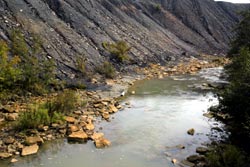 A one-hour documentary about mining and abandoned mine drainage in Pennsylvania A one-hour documentary about mining and abandoned mine drainage in Pennsylvania
Hope for Polluted Waters tells the personal stories of the individuals and groups working throughout the coal-mining regions of Pennsylvania to clean up the abandoned mine drainage (AMD) that pollutes over 4,000 miles of waterways in the state.
The focus of the story is the people themselves; their passions, frustrations, challenges and ultimately their triumphs over pollution. Dedication drives these individuals, whose goal is a better future. These emotions are evident in every one of the volunteers who is trying to correct the wrongs of the past. . (more)
|
|
Press Releases: Peterson, House colleagues send major Abandoned Mine bill to Senate
|
|
P R E S S R E L E A S E
C O N G R E S S M A N John E. Peterson
Proudly Serving Pennsylvania's Fifth Congressional District
For Immediate Release - December 8, 2006
Contact: Chris Tucker - (202) 225-5121
Plan would allow Pennsylvania to collect $1.5 billion to remediate most dangerous mines
Washington, DC - The state of Pennsylvania will receive nearly $1.5 billion in federal funding from an account created to help states reclaim Abandoned Mine Lands (AML) thanks to legislation passed this afternoon by the U.S. House and co-written by Congressman John E. Peterson, R-Pleasantville. The legislation, attached to a broader measure that also included Peterson-backed provisions to expand access to vital energy reserves offshore, passed today by a vote of 367-45 and will now be sent to the Senate for final approval.
"The health and safety hazards created by abandoned coal mines constitute a national emergency for which there must be a swift, national response," said Peterson. "For far too long, though, the federal fund created to accelerate the clean-up and reclamation of our most dangerous sites was sending far too much money to places where there wasn't an abandoned mine to be found. Today, we changed that formula - and with it, created the conditions necessary to clean up our sites sooner than we could have ever imagined."
"This is the most important economic development and environmental legislation to affect our state and other historic coal production states that has ever passed," said R. John Dawes, chairman of the Pennsylvania AML Campaign, a coalition of 200 conservation and watershed associations. "This is life-saving legislation that goes beyond addressing the health impacts of living near these sites," adding that more people have died in the past four years as a result of dangerous abandoned mine lands than in oft-publicized underground mining accidents.
The AML Fund was created nearly 30 years ago to finance the cleanup of hazardous abandoned mine sites across the country. Under the current program, Pennsylvania collects roughly $23 million each year to reclaim the most dangerous mine lands across the state. But with the current need for funding estimated at more than $1 billion, it would take almost 50 years at the government's current pace to clean up each of these high-priority sites.
The AML language the House passed today will allow Pennsylvania to claim more than triple that figure over the next 10 years. In fact, starting in fiscal year 2008 and going through until 2017, state officials will receive approximately $680 million - with further adjustments promising to yield as much as $1.5 billion over the next 15 years. All told, the AML's new funding formula would allow state and local officials to reclaim and recover nearly all the state's high-priority sites a full 45 years earlier than they would have under the current arrangement.
"Finally, and thankfully, we now have commonsense legislation that will go a very long way to fixing the long-standing problems of abandoned mine lands and waters across our state," said Bruce Golden, regional coordinator for the Western Pennsylvania Coalition for Abandoned Mine Reclamation. "Pennsylvania, whose AML problems dwarf all others, owes a great deal of gratitude to Congressman Peterson for the environmental good that will come from this historic piece of legislation.
"It's a new day in Pennsylvania," he added.
The legislation must now be considered by the U.S. Senate before being sent to the president for his signature.
|
| |
OUR 11TH YEAR!
The Annual Pennsylvania Conference on Abandoned Mine Reclamation will be held on July 13-16, 2009 at the University of Pittsburgh Campus in Johnstown, PA. Visit www.TreatMinewater.com for more details and previous conferences
|
|
Volunteer With Us or Jumpstart Your Career
|

|
|
|
Postal Address...
|
Luzerne Conservation District
485 Smith's Pond Road
Shavertown, PA 18708
Phone: 570-674-7991
Fax : 570-674-7989
Directions
|
|

Please enter "EPCAMR" as your charity.
|
|
|
 or
or  feeds
feeds


